From Oberting’s race track to four lanes on Highway 46 — the roads, bridges, and rail crossings that moved Batesville.
Batesville & the road to OldenburgLast updated November 13, 2026
Photos
Photos of this place.
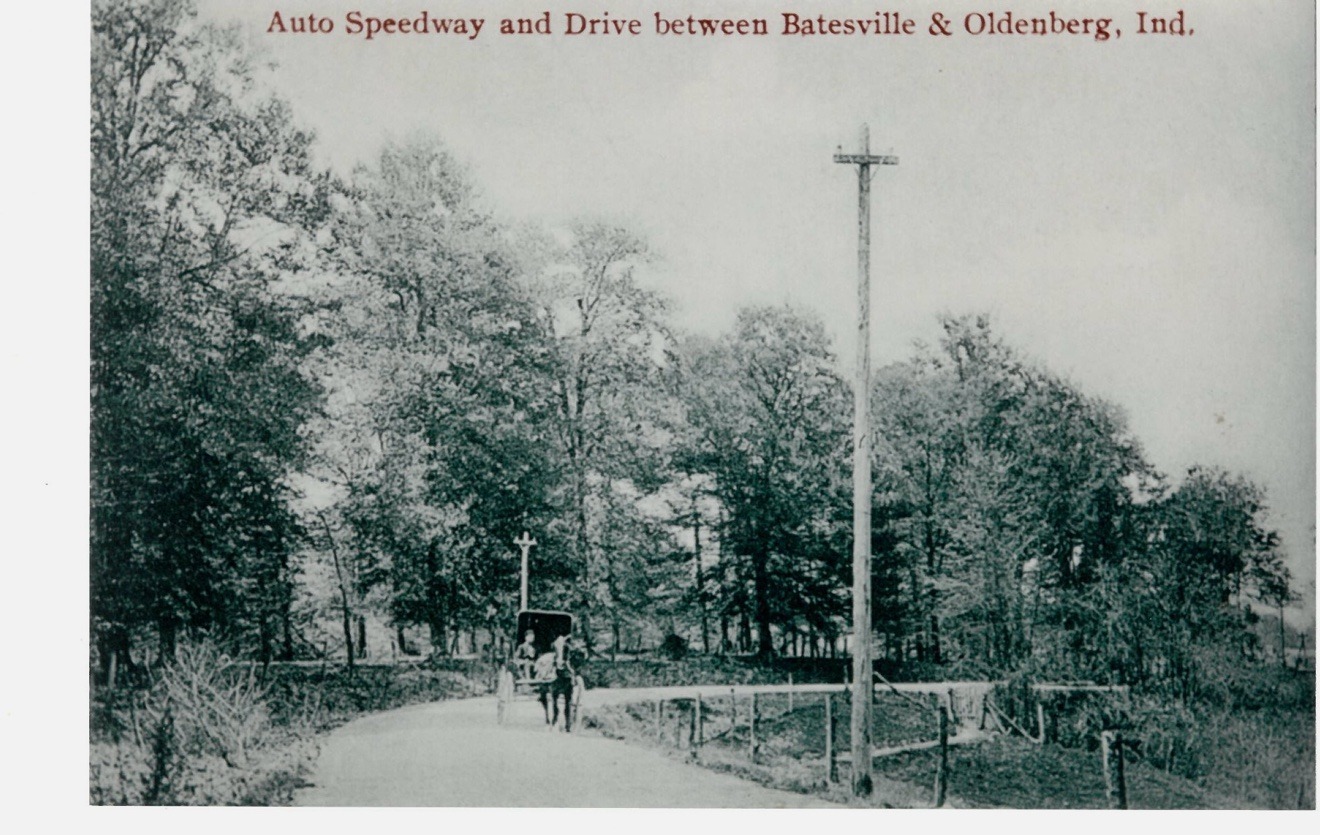
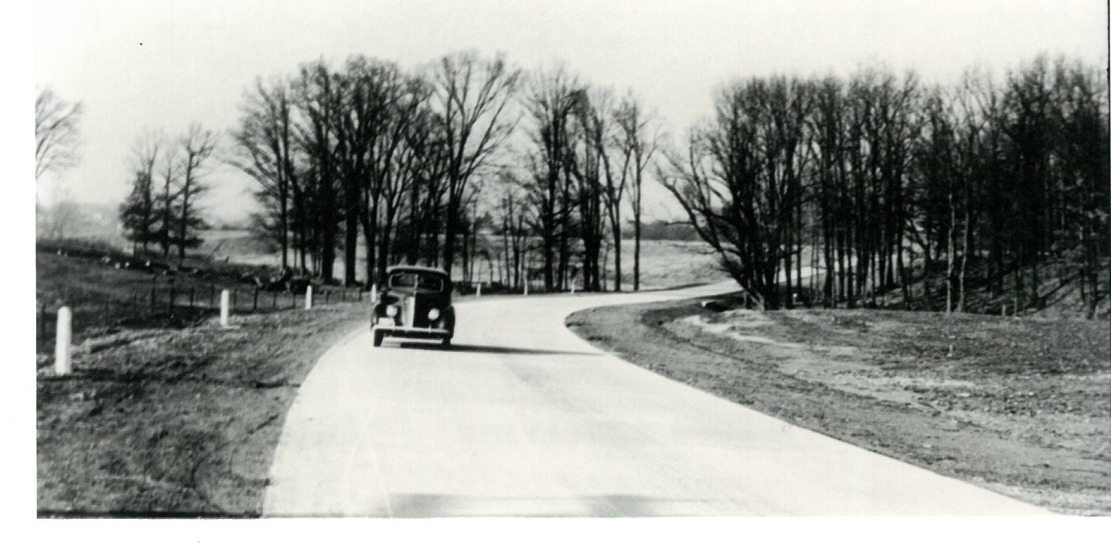
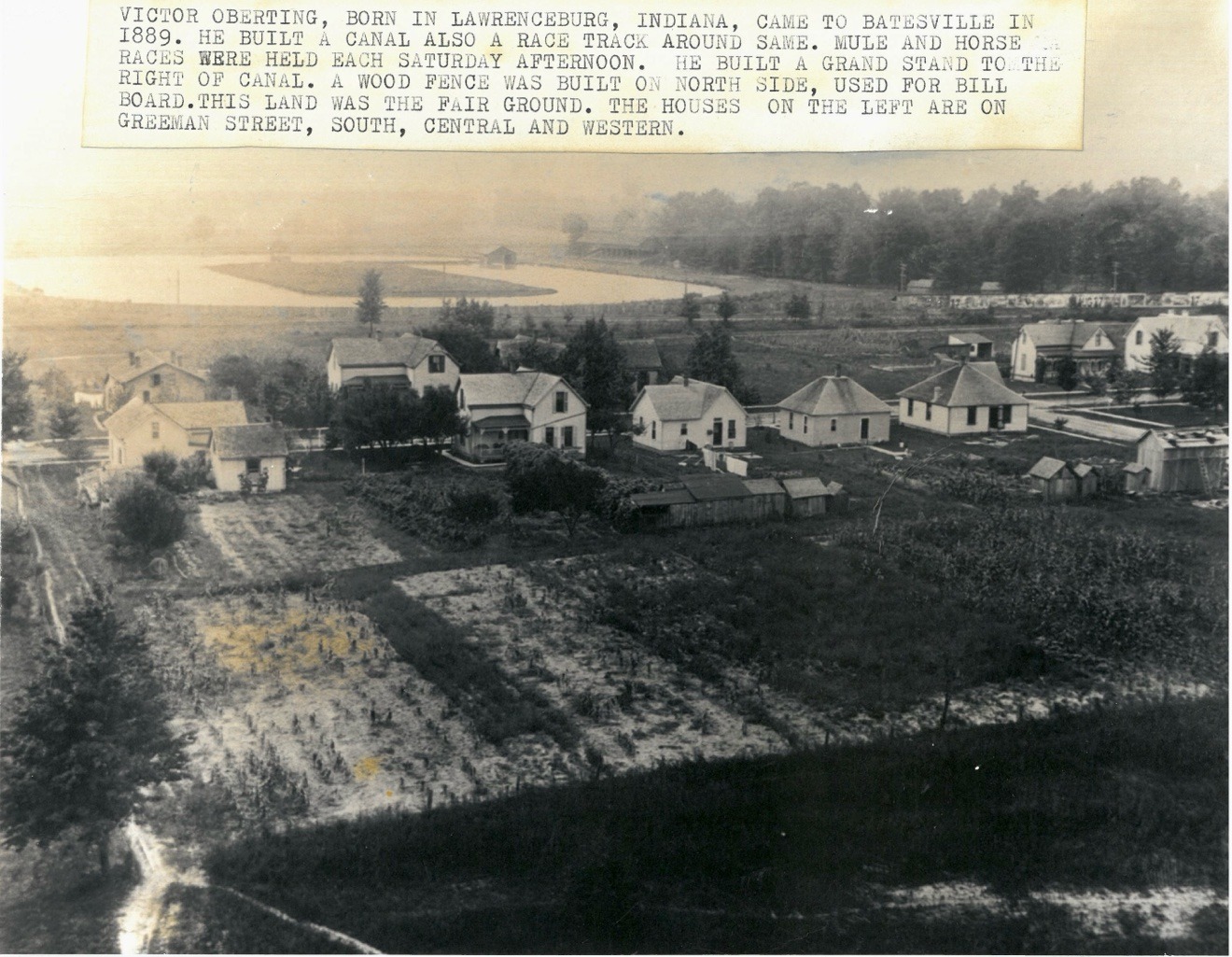
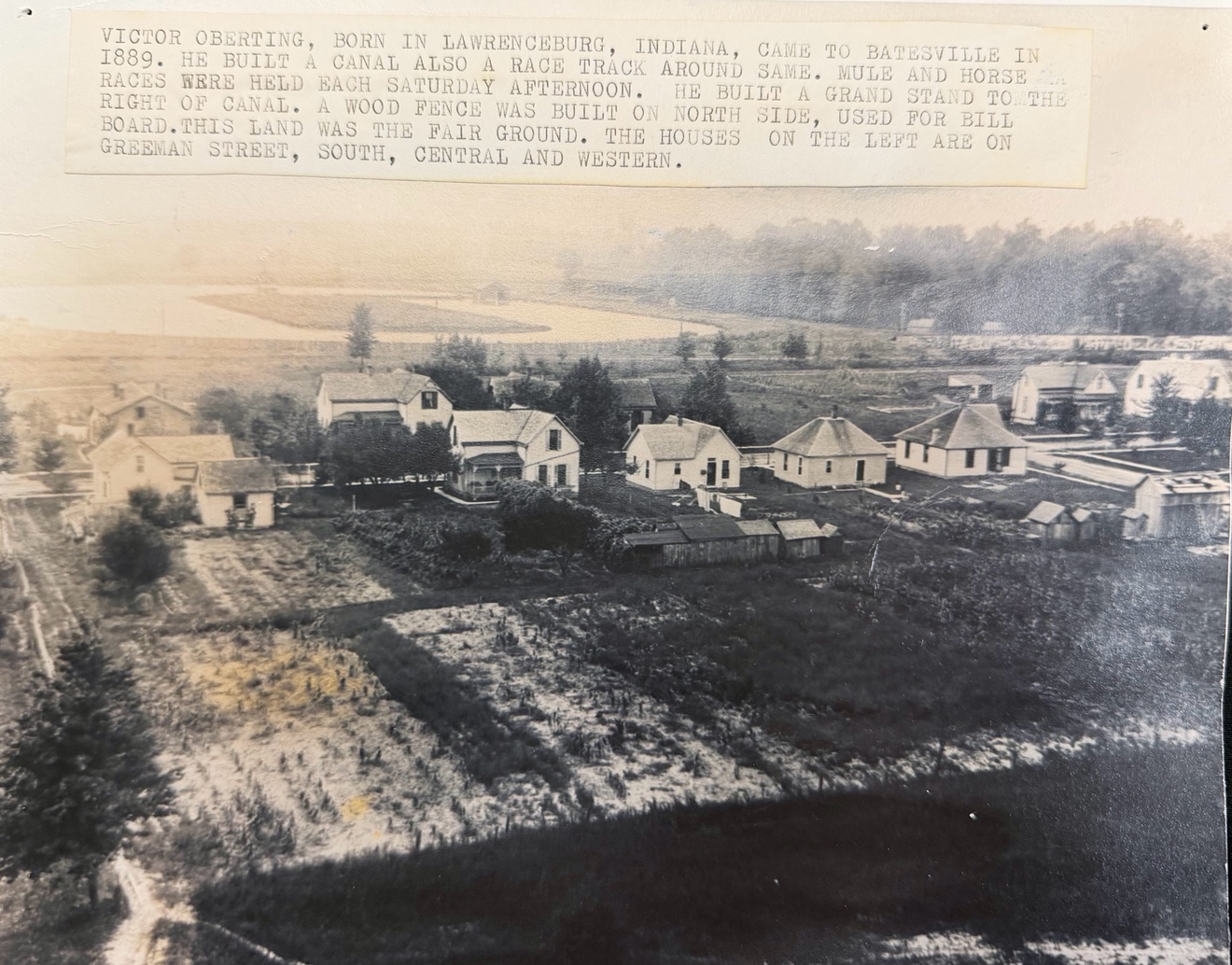
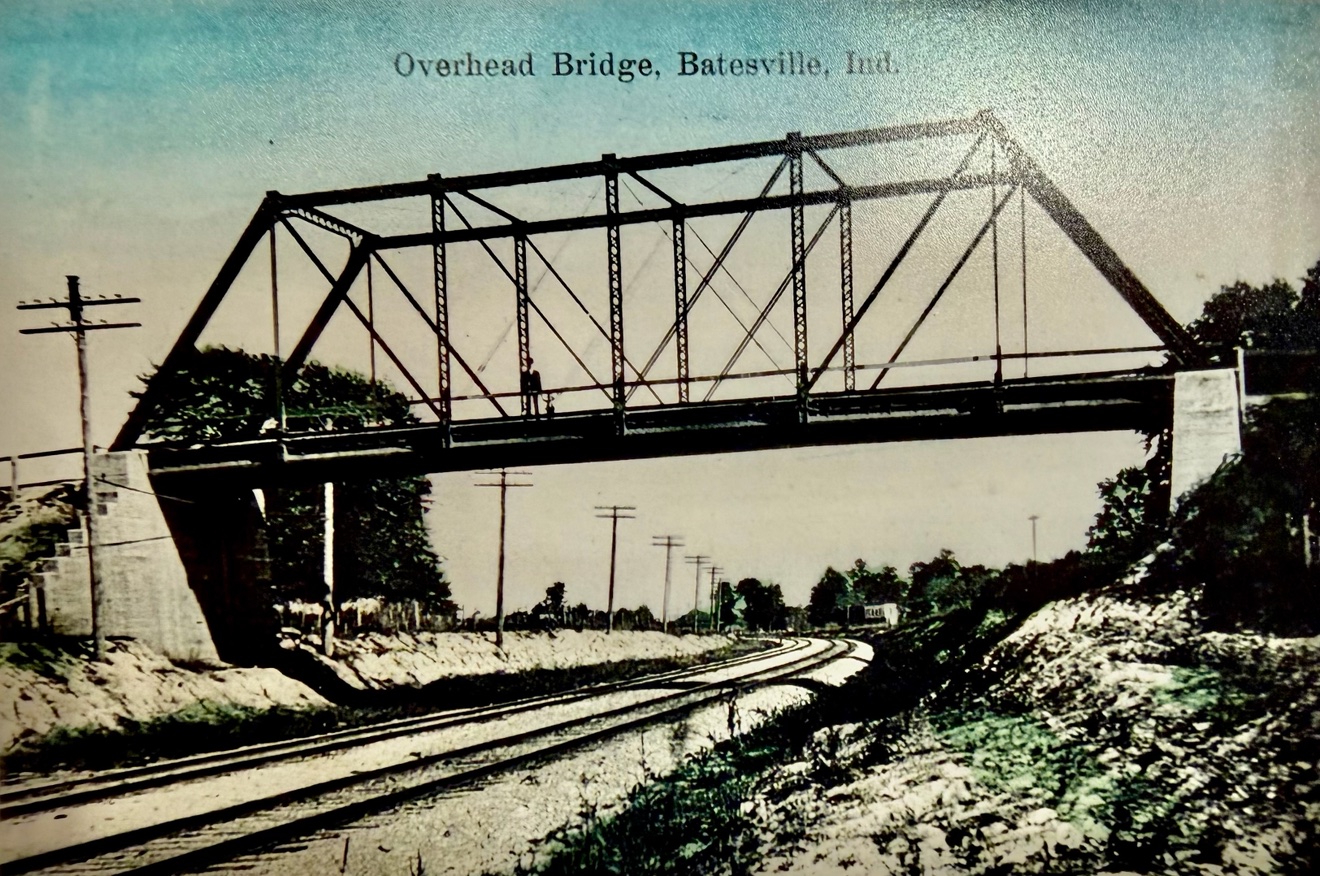
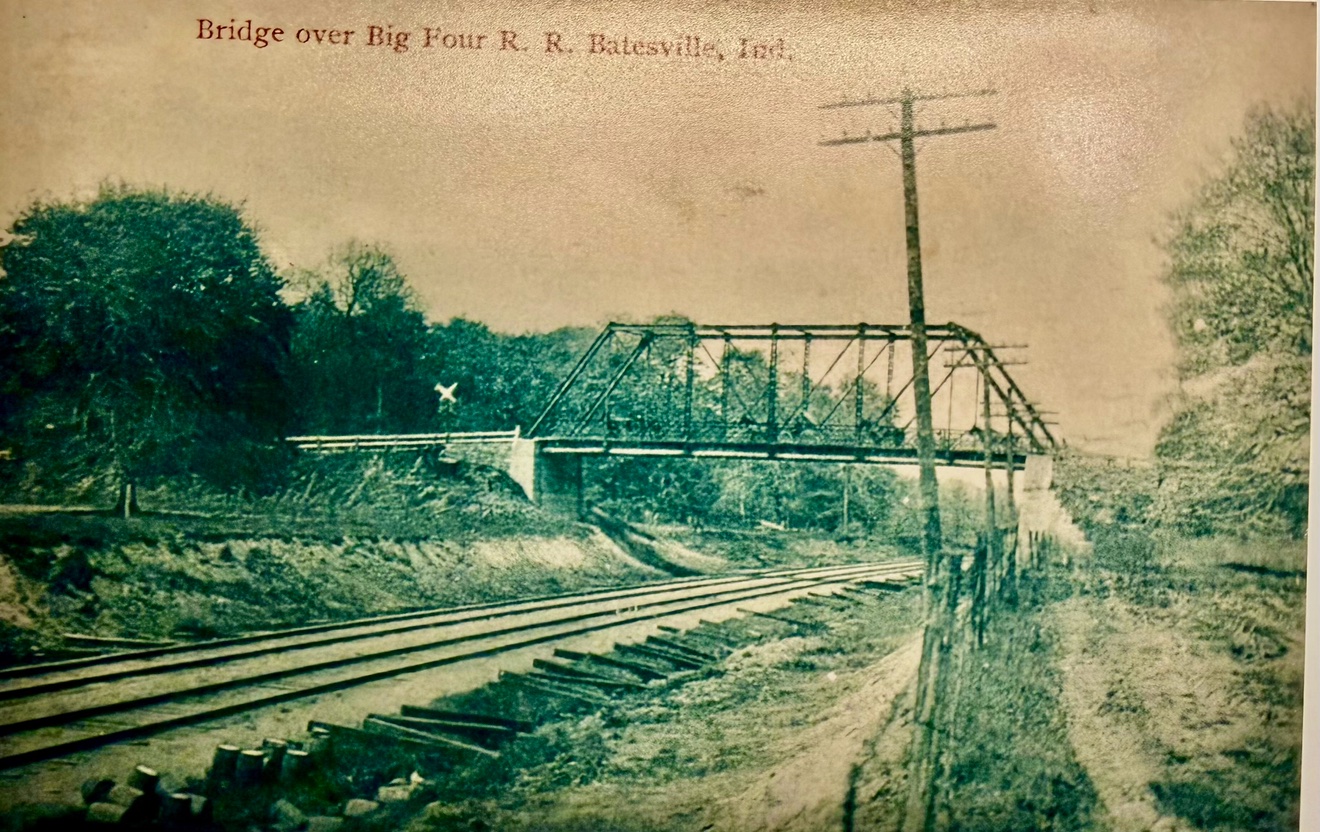
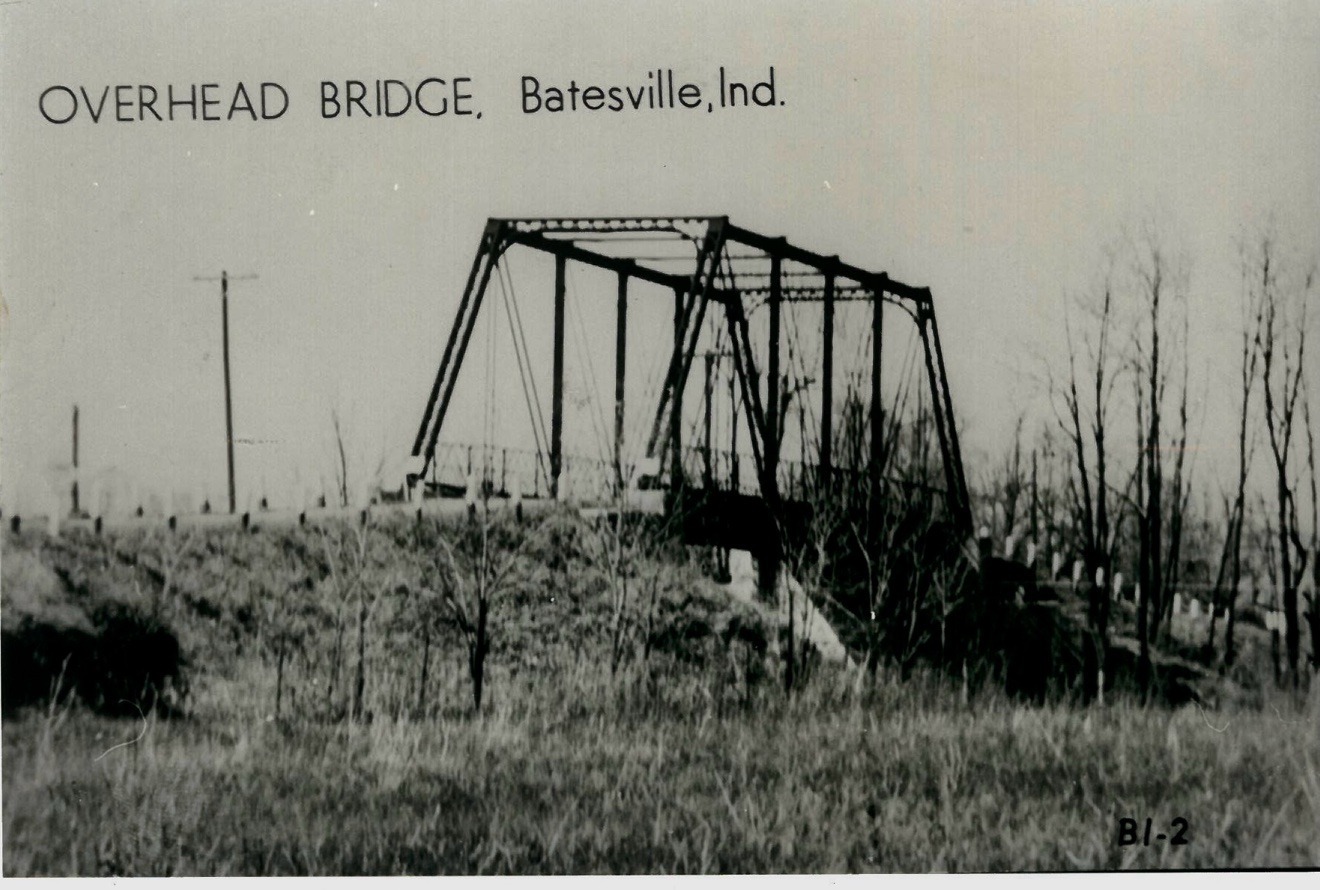
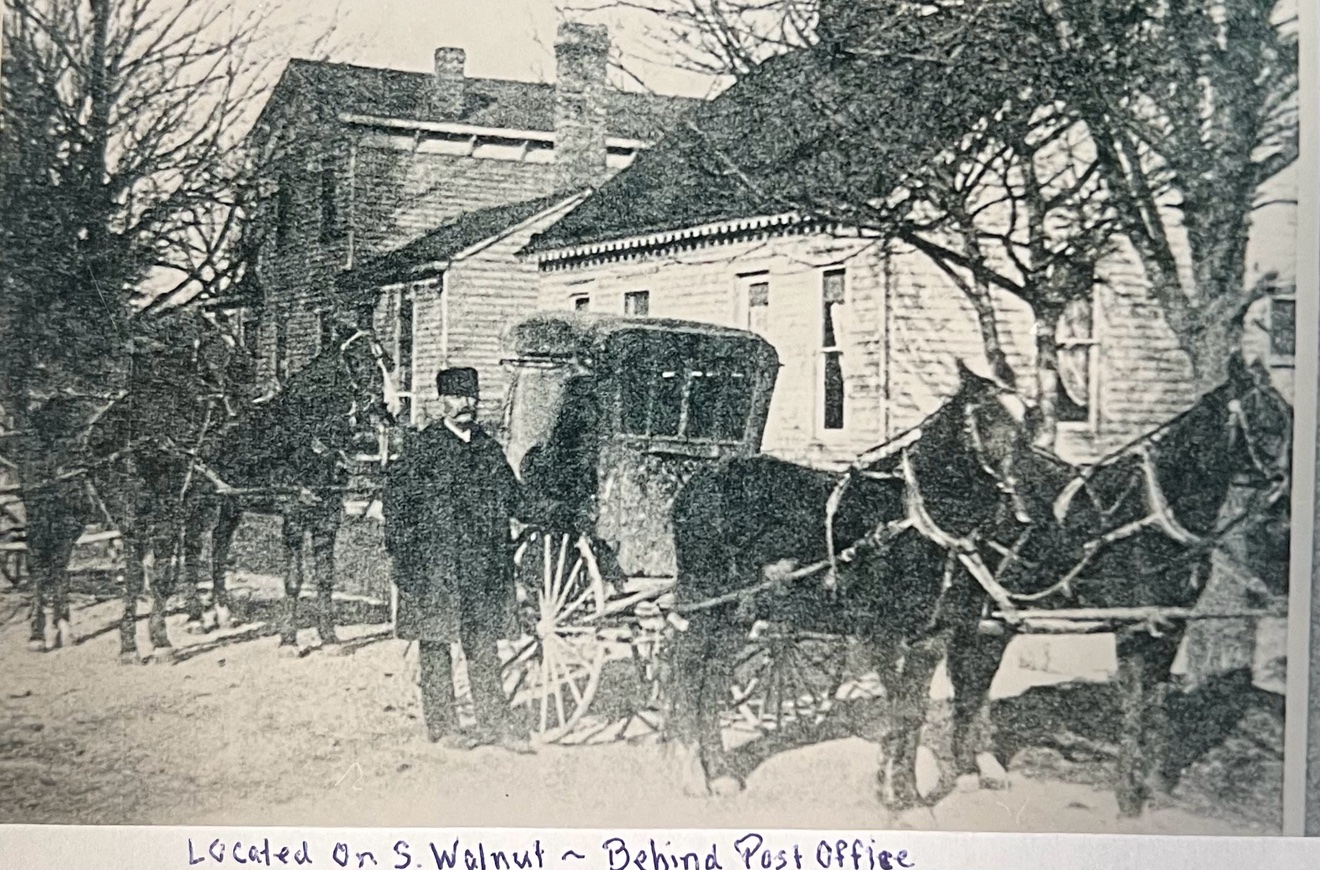
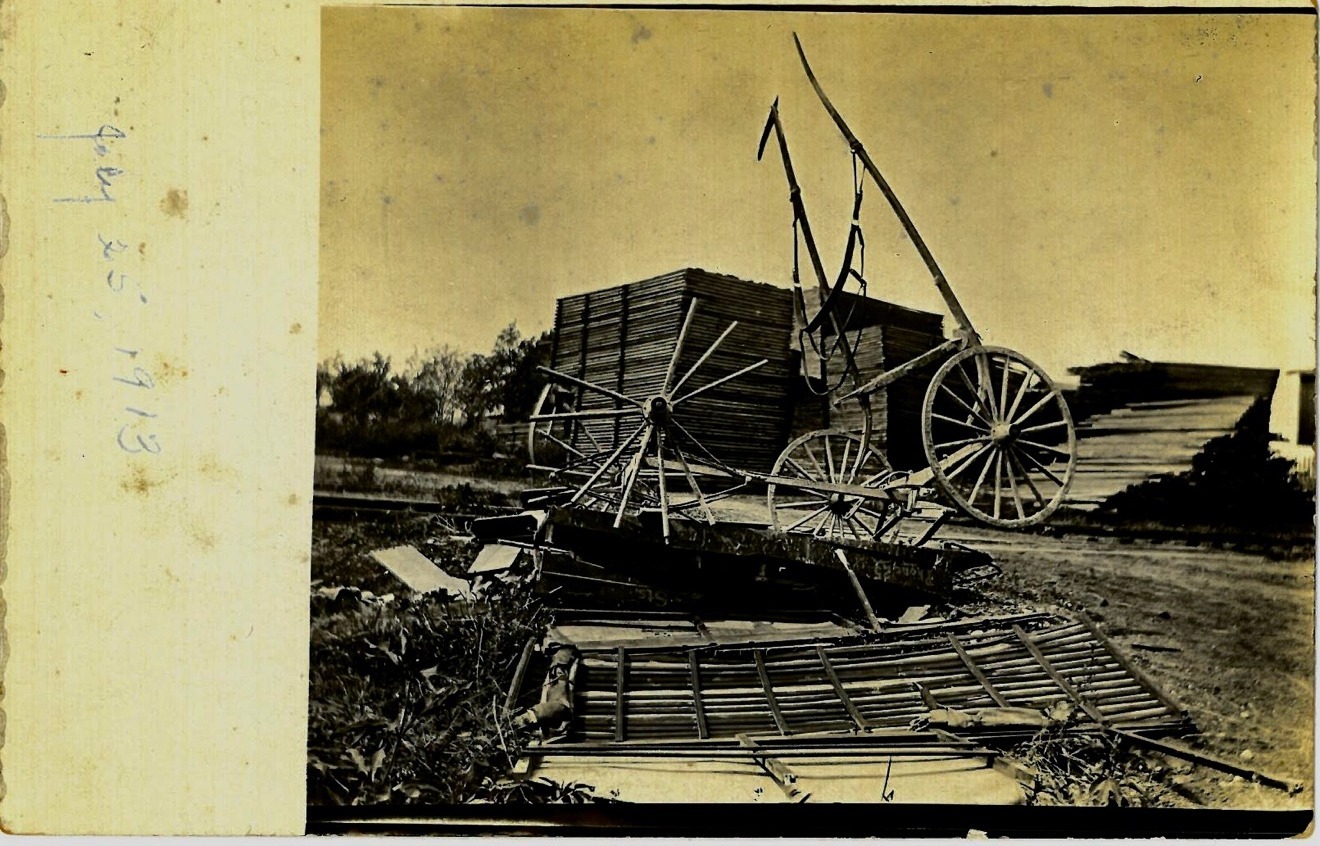
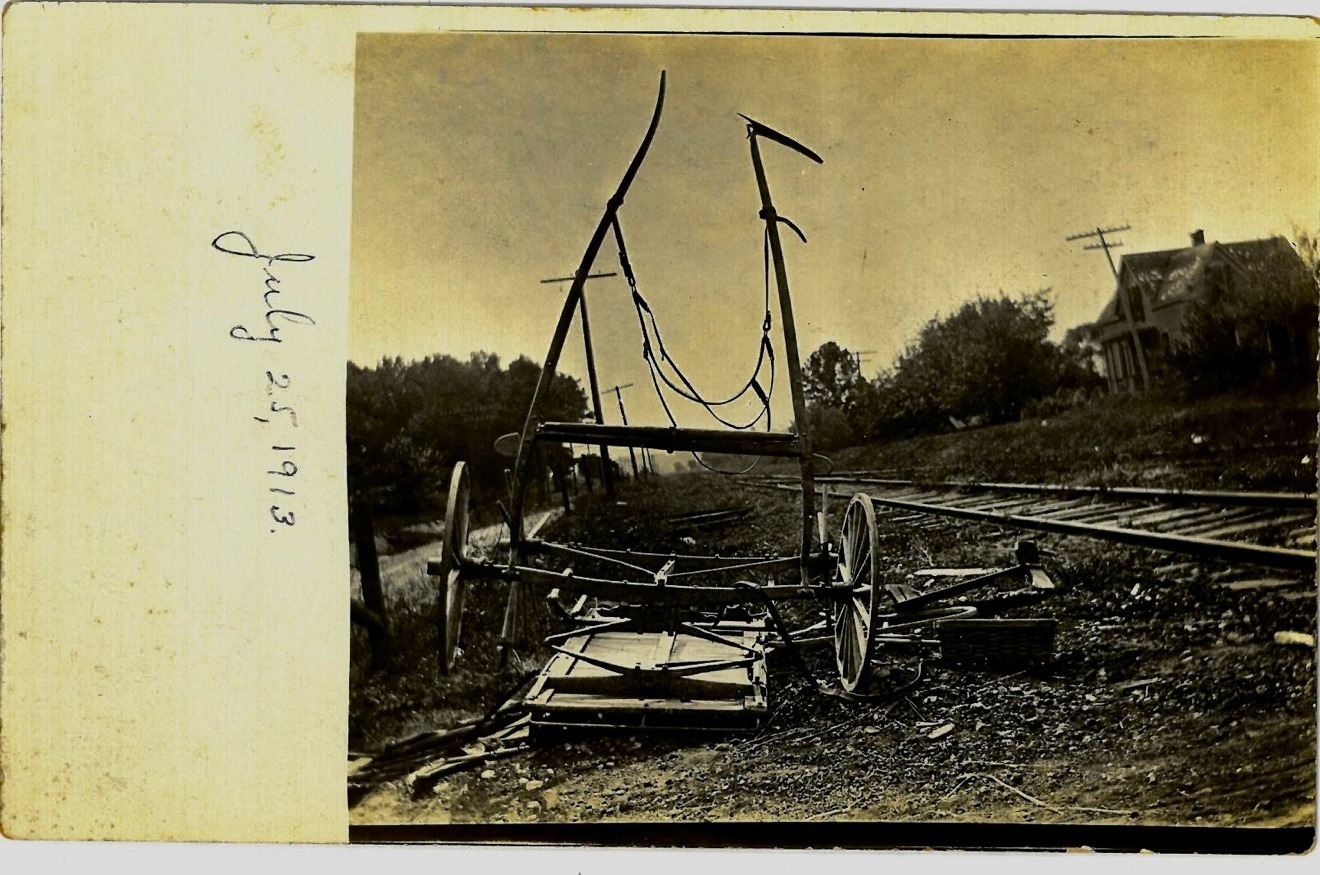
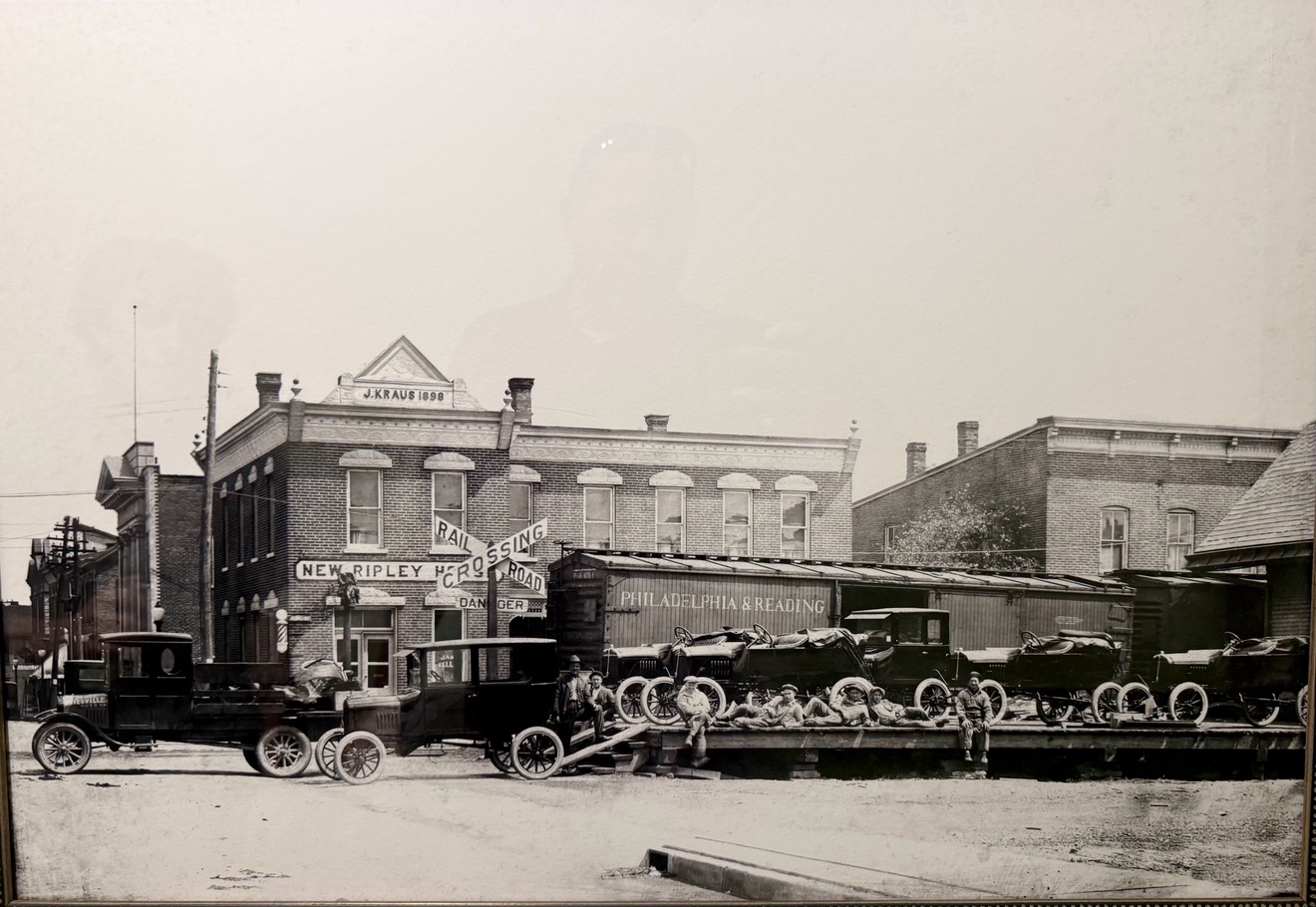
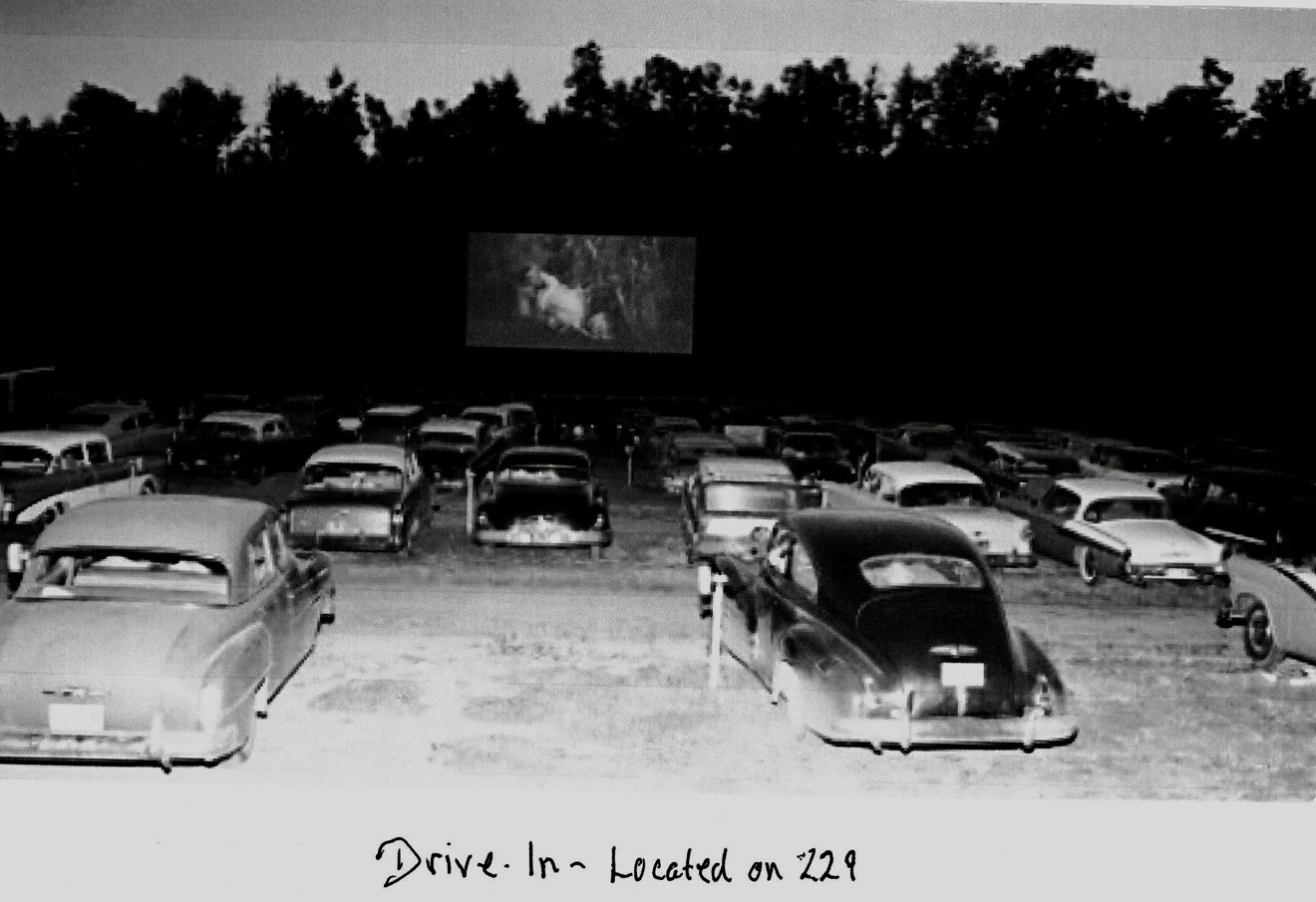
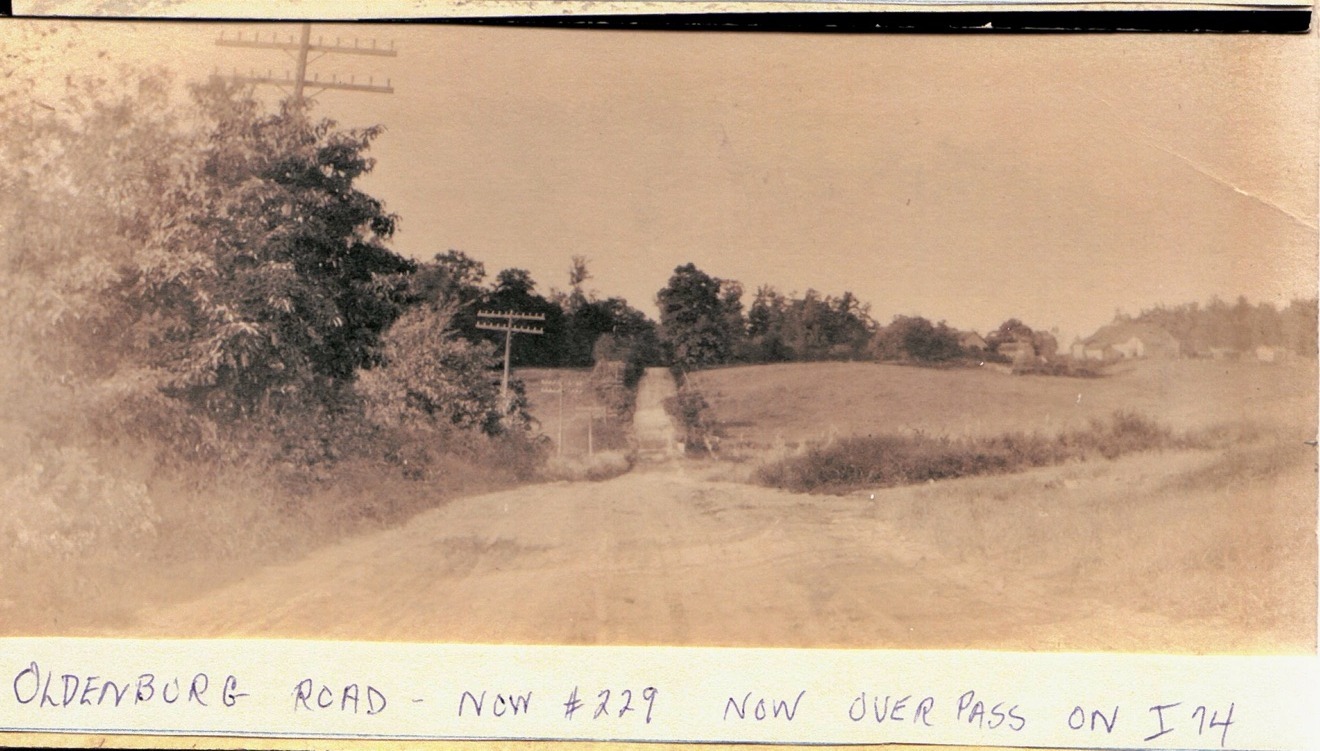
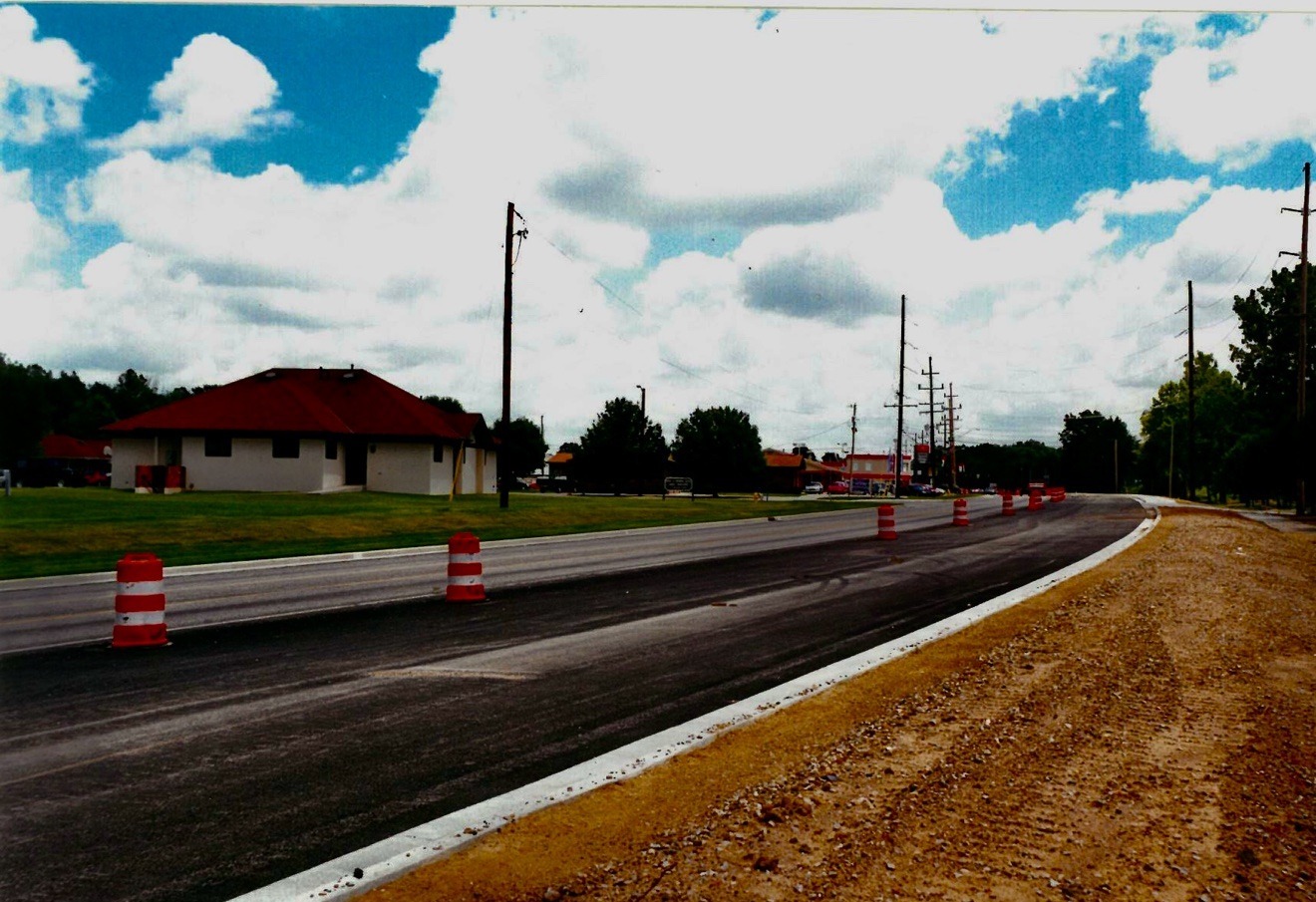
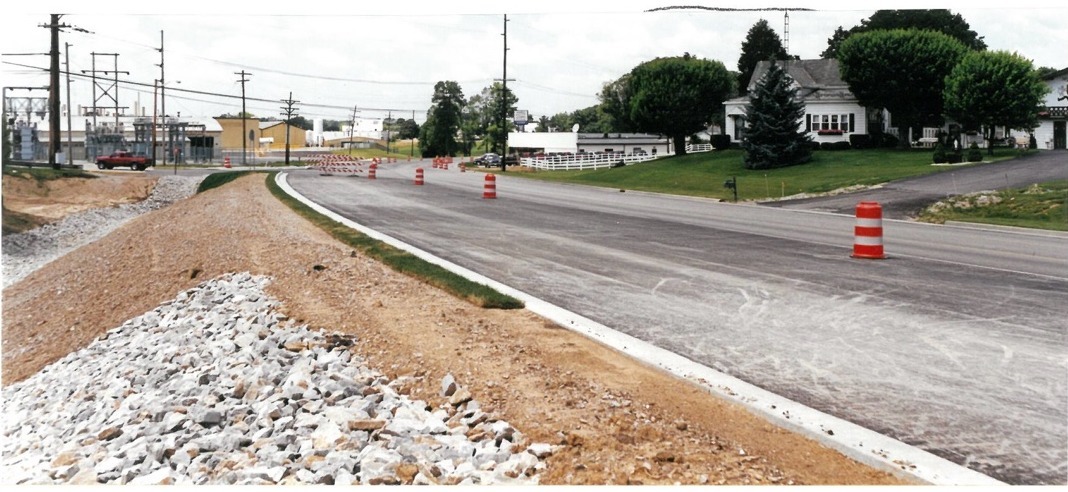
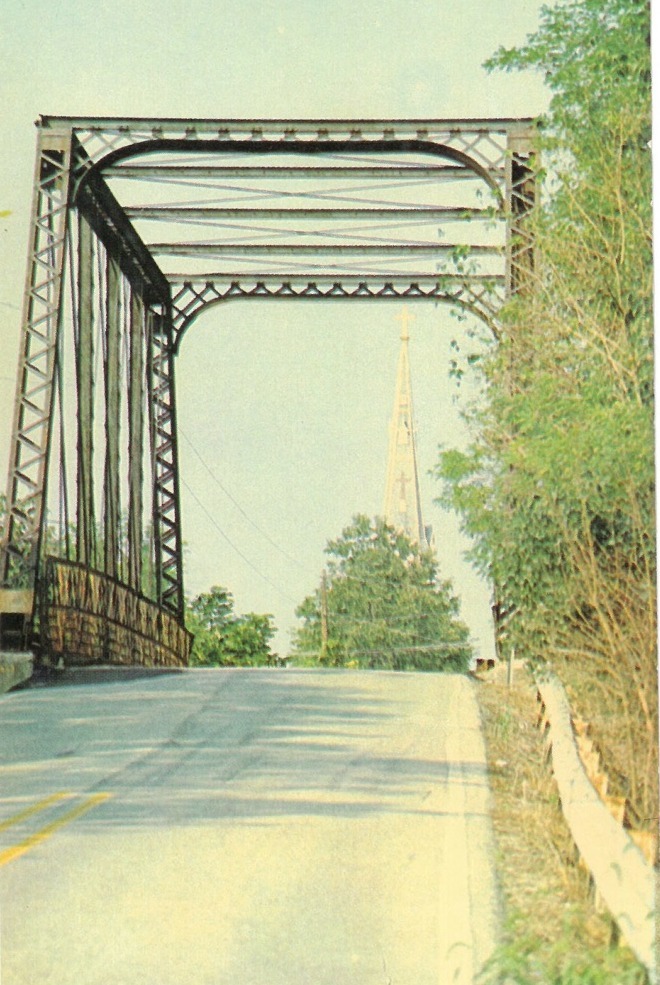
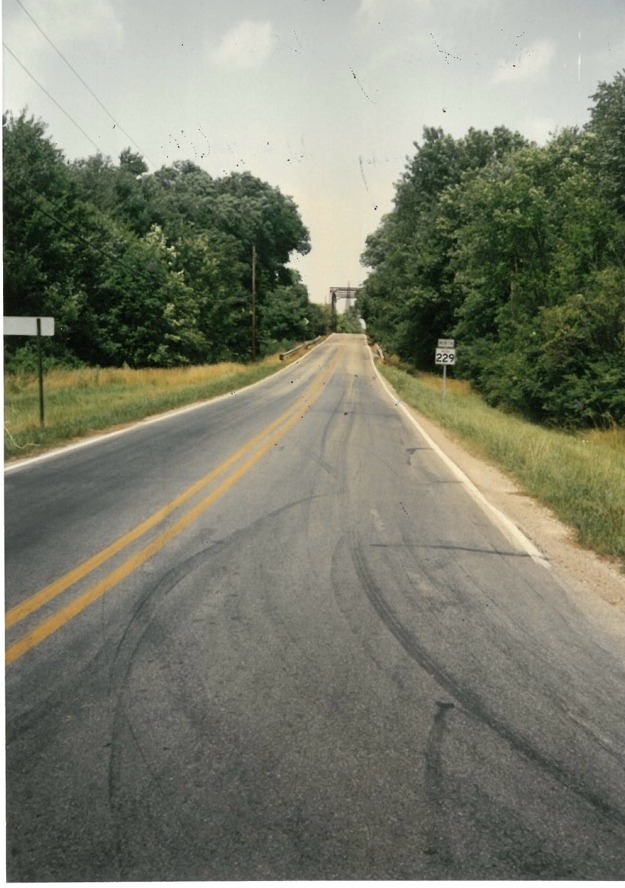
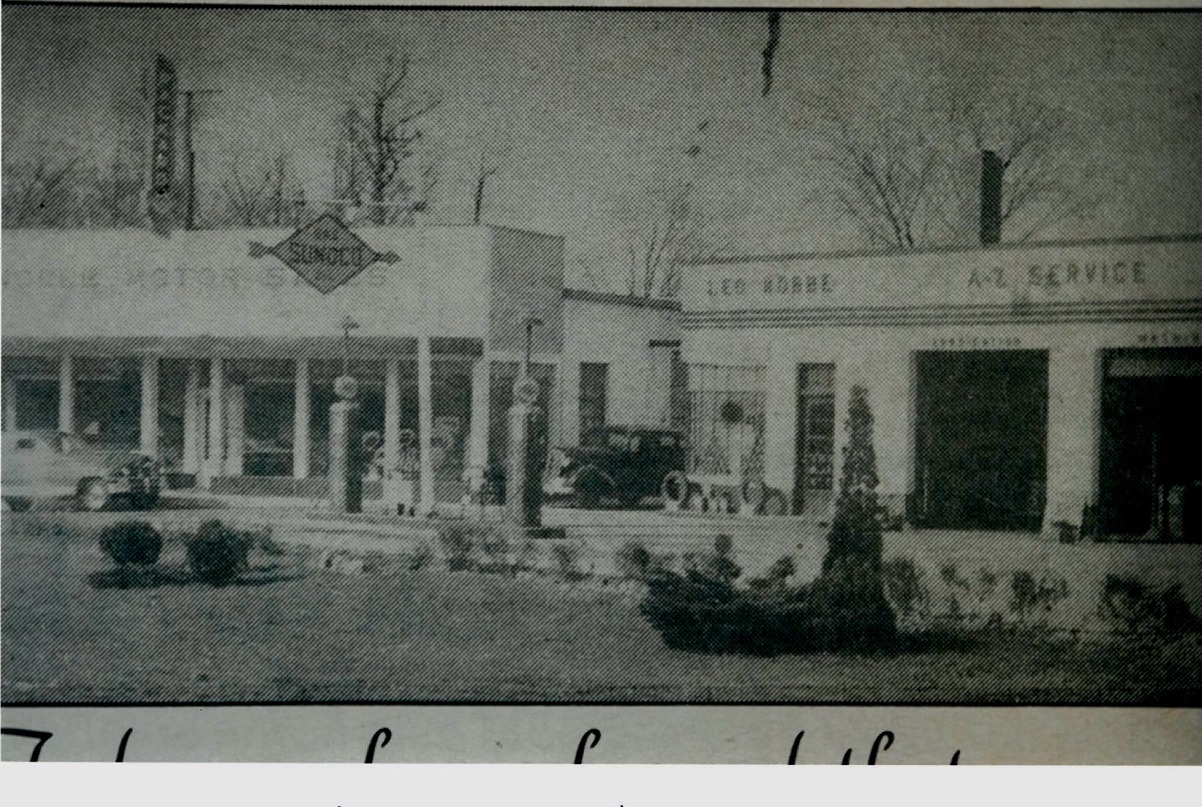
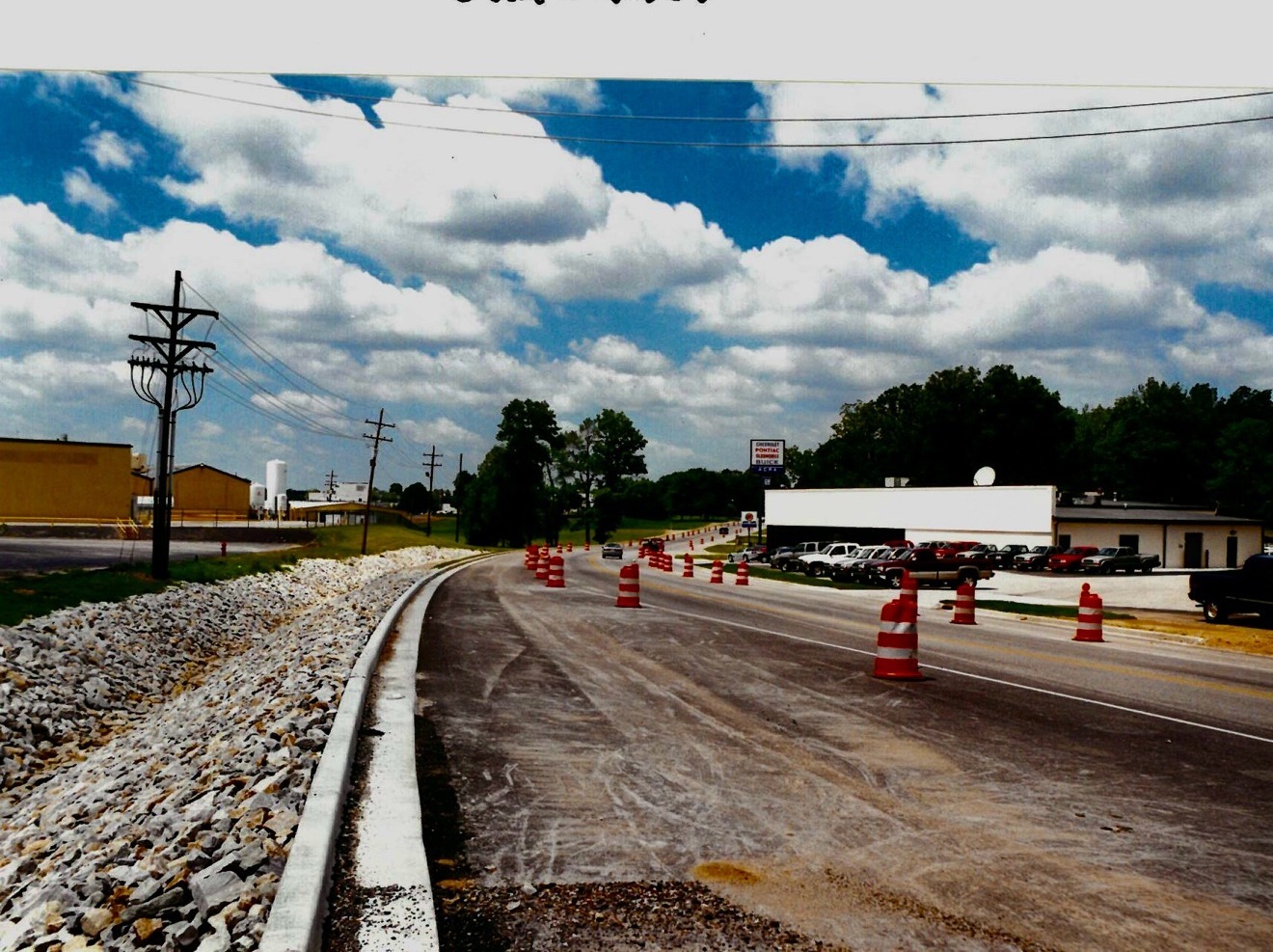
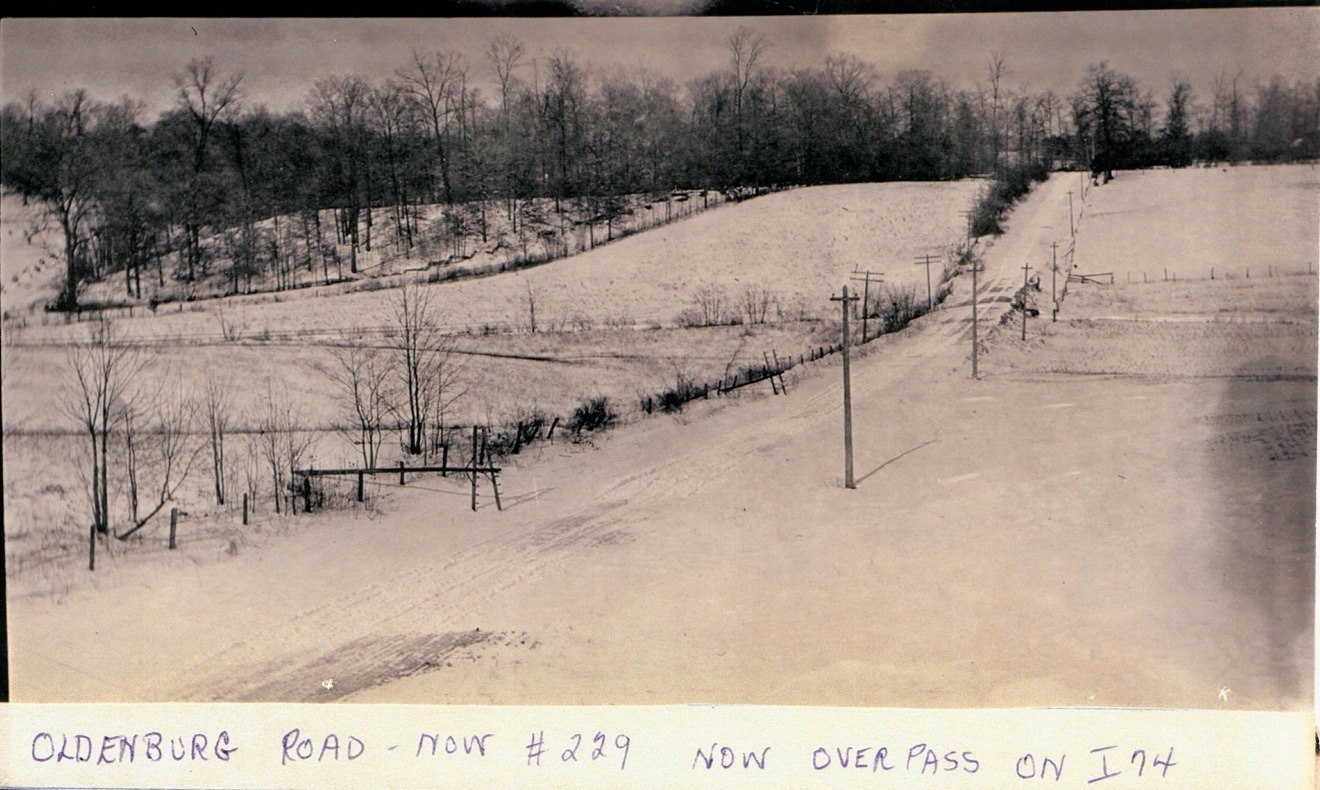
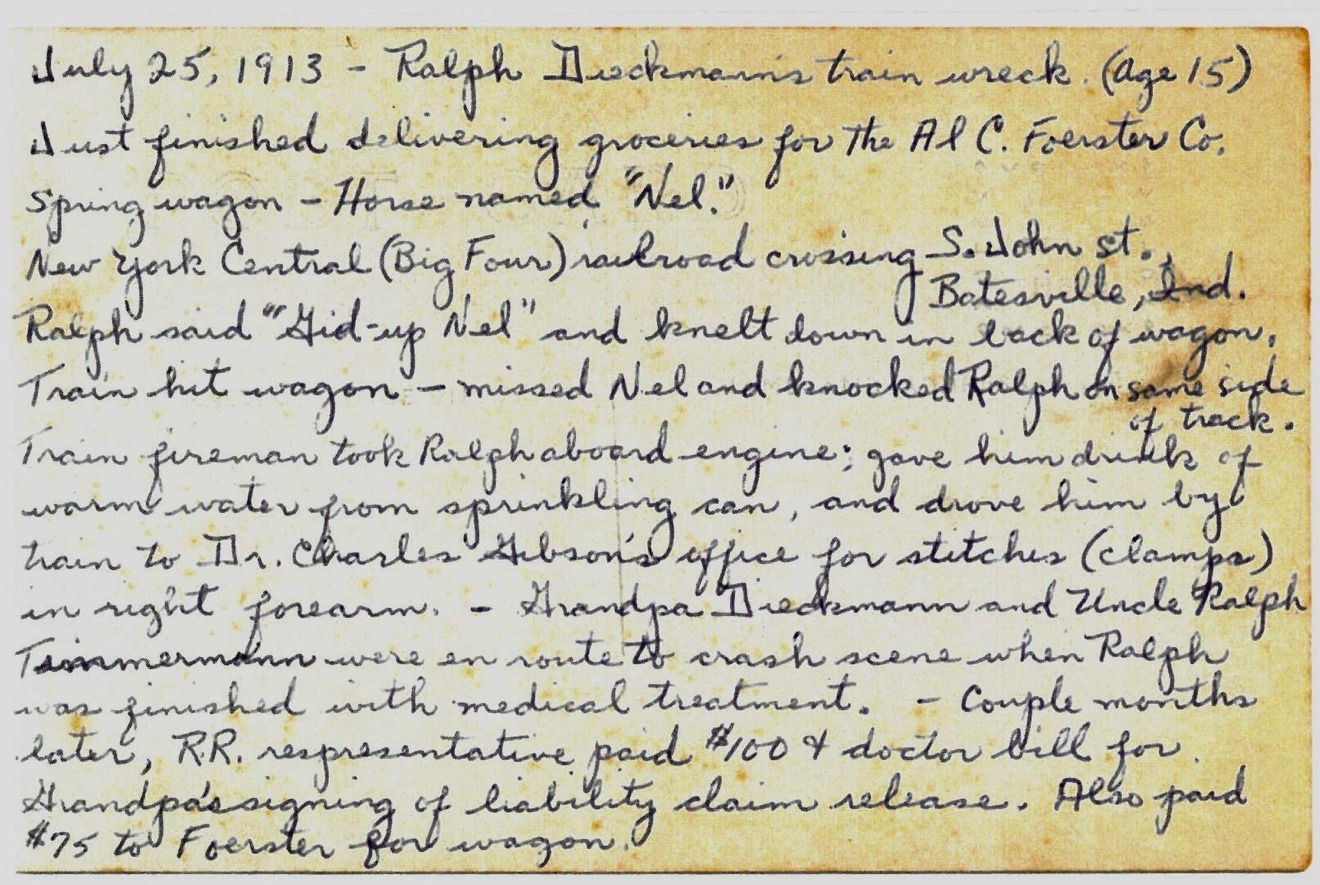
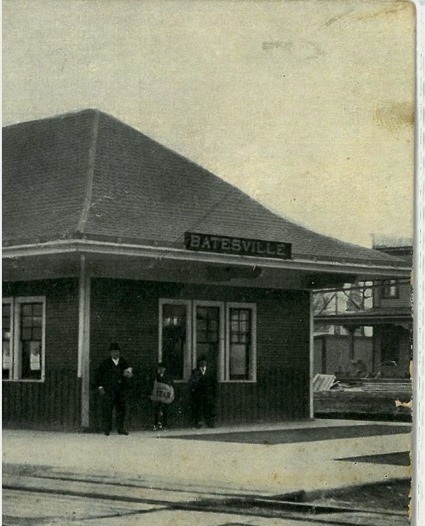
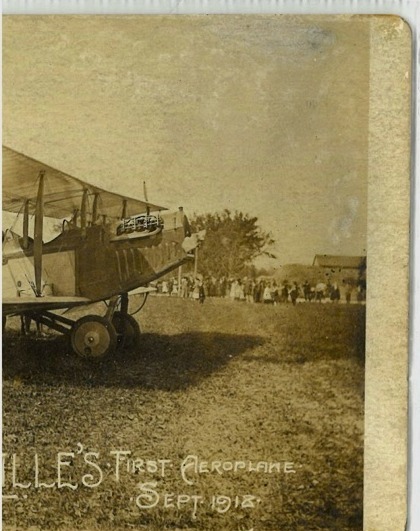
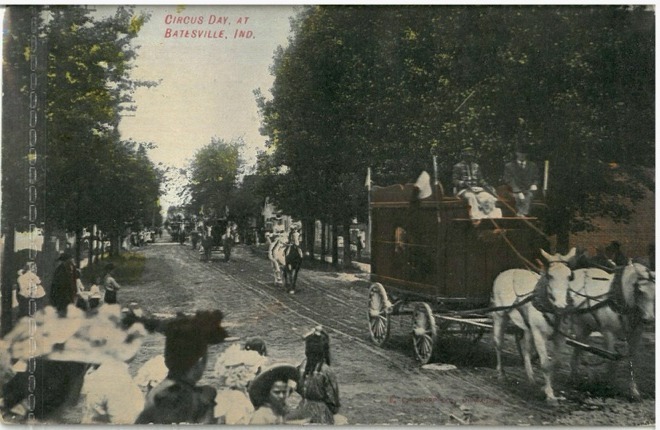
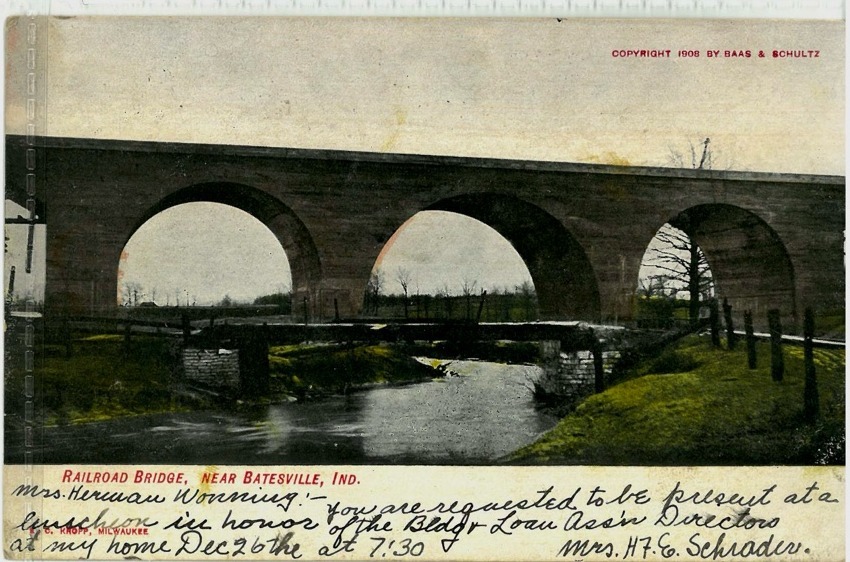
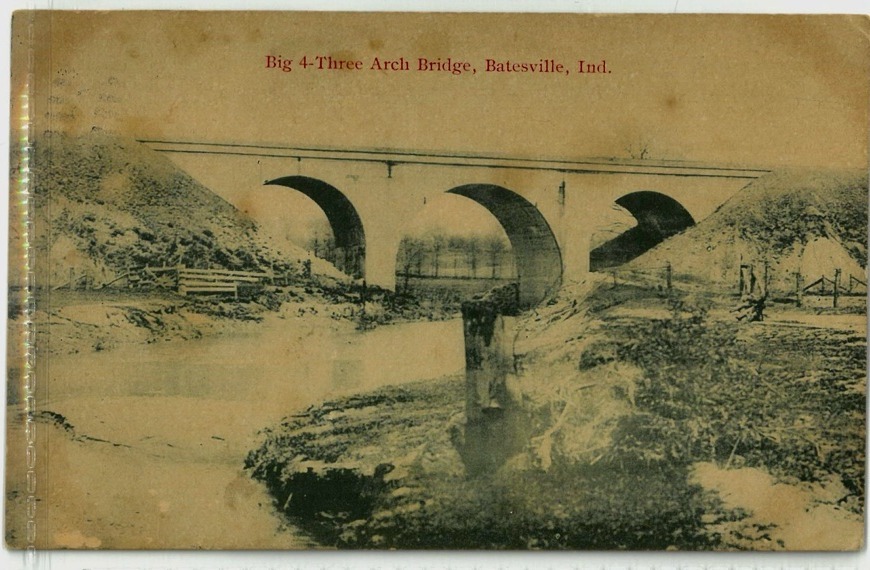
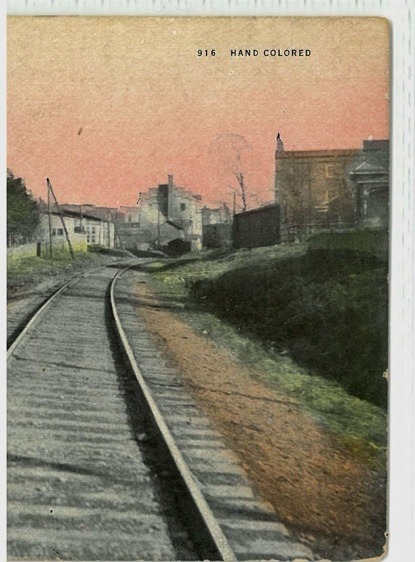
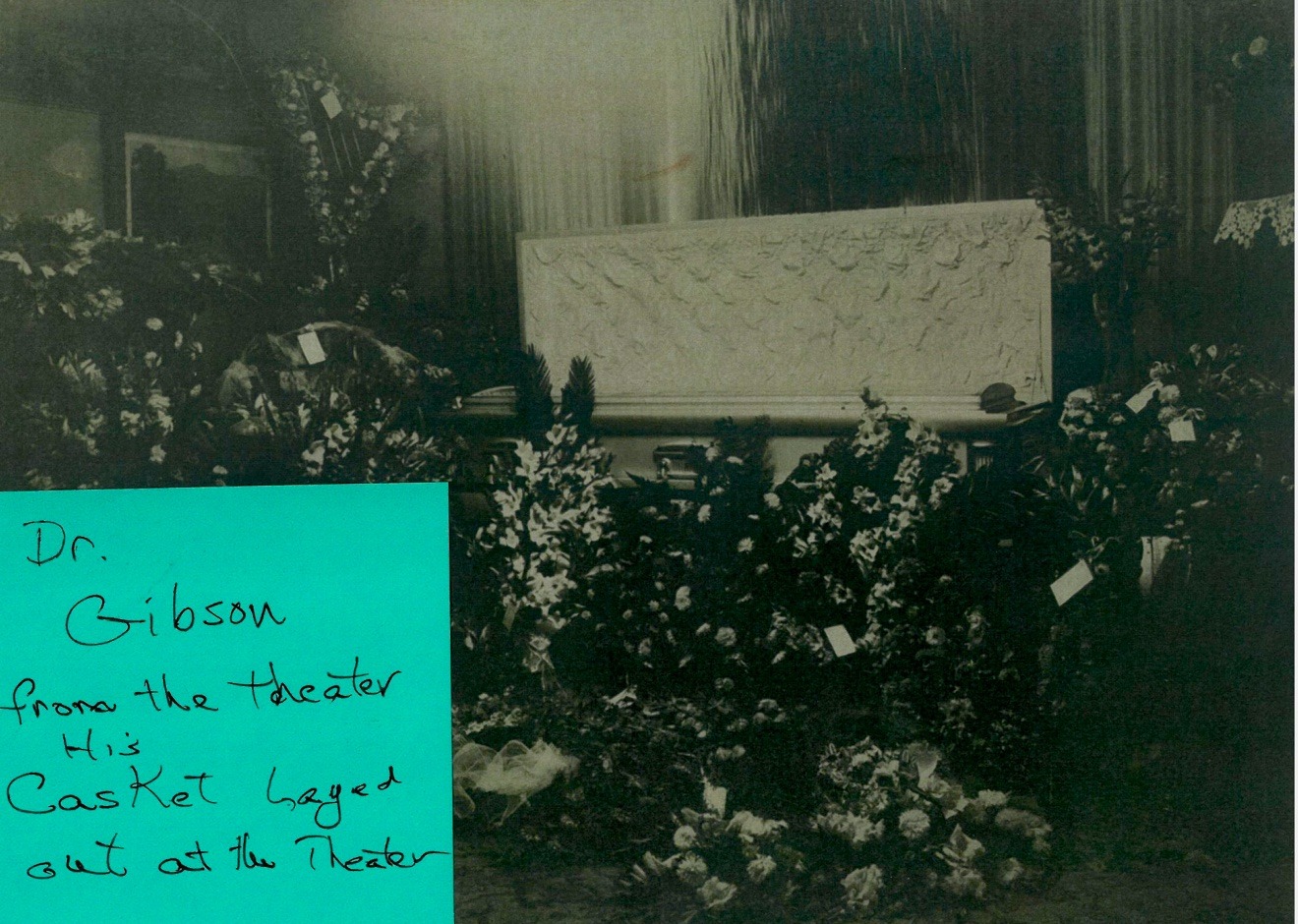
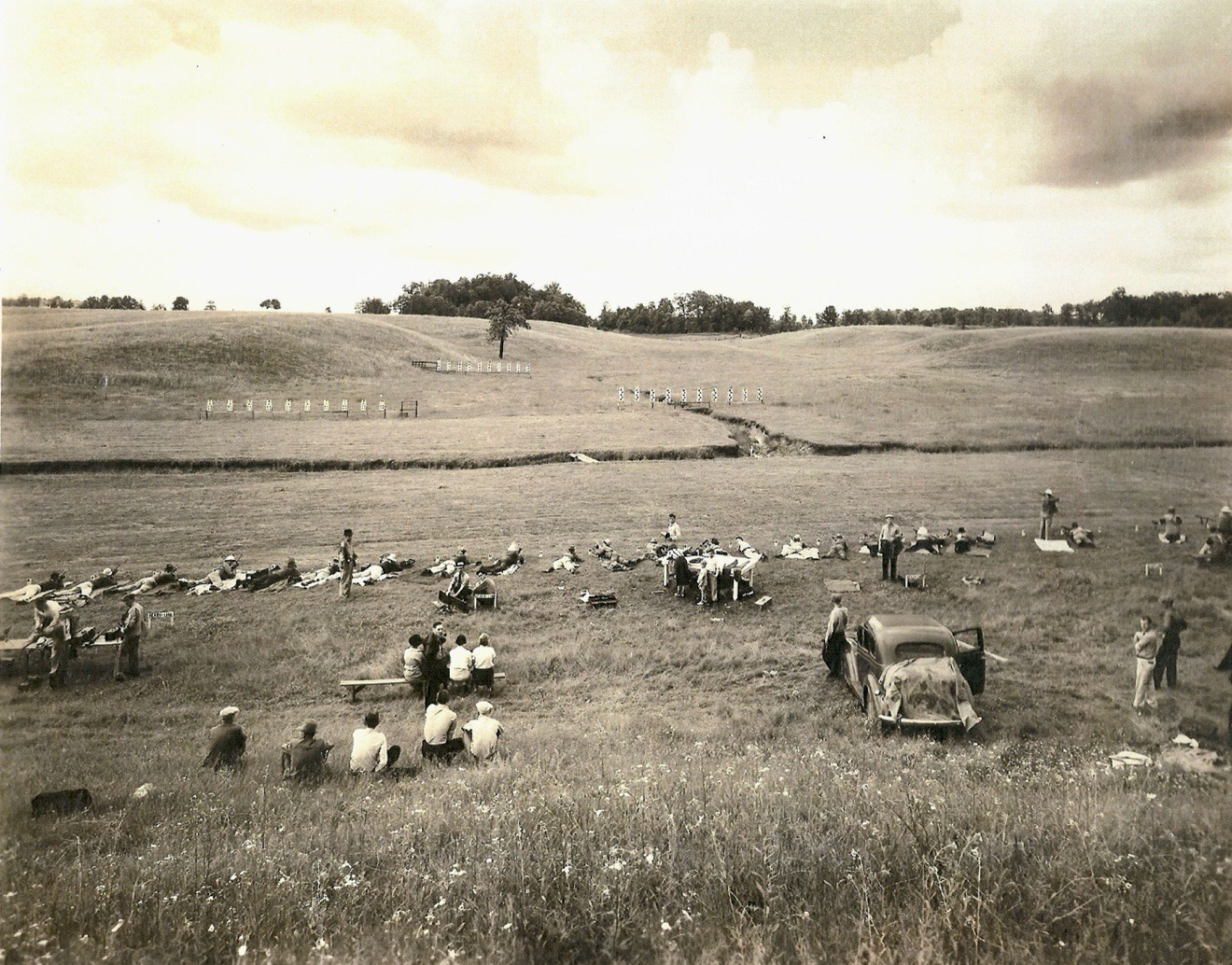
The Auto Speedway and Drive between Batesville and Oldenburg — a horse and buggy on the tree-lined dirt road. (The card spells it “Oldenberg.”) Photo courtesy Batesville Historical Center.Highway 46, looking west — surveyed in 1922. Nobbe Motors would later stand on the right; George’s Pharmacy today. Photo courtesy Batesville Historical Center.Victor Oberting’s canal and race track: he came from Lawrenceburg in 1889, built the canal and the track around it, and ran mule and horse races every Saturday afternoon. The land was the fairground; the houses on the left are on Greeman, South, Central, and Western streets. Photo courtesy Batesville Historical Center.The same print, photographed clean — Oberting's canal and race track, 1889. Photo courtesy Batesville Historical Center.The overhead bridge over the railroad, Batesville — a postcard view, the truss span carrying the road over the tracks. Photo courtesy Batesville Historical Center.The bridge over the Big Four Railroad, Batesville — the same crossing from farther off, the tracks curving away under it. Photo courtesy Batesville Historical Center.The overhead bridge again, marked B1-2 — a later view, the span standing over brush and the cut below. Photo courtesy Batesville Historical Center.A horse-drawn carriage on South Walnut, behind the post office. Photo courtesy Batesville Historical Center.A wagon wreck — the cart overturned by the lumber stacks. Photo courtesy Batesville Historical Center.The same wreck from the other side — the overturned wagon by the railroad tracks. Photo courtesy Batesville Historical Center.New automobiles arriving by rail in front of the J. Kraus building (1898) — men unloading the touring cars from the flatcars. Photo courtesy Batesville Historical Center.The drive-in on State Road 229 — cars lined up for the screen. Photo courtesy Batesville Historical Center.Oldenburg Road — now 229, now the overpass on I-74. (The caption is the photograph’s own.) Photo courtesy Batesville Historical Center.Highway 46, four lanes going in, 2000 — the new pavement curving past the white building with the red roof. Photo courtesy Batesville Historical Center.2000 — putting in four lanes on Highway 46, looking west. The photograph's own caption reads: '2000 — Putting In 4 Lanes ~ Hwy. 46 ~ Looking West.' Photo courtesy Batesville Historical Center.Looking through the Big Four bridge truss toward a church steeple. Photo courtesy Batesville Historical Center.State Road 229 in July 1989, running toward the bridge in the distance. Photo courtesy Batesville Historical Center.Nobbe Motors on Highway 46 — motor sales and Sunoco service, Leo Nobbe's A-Z Service. The note says George's Pharmacy stands here today. Photo courtesy Batesville Historical Center.June 2000 — putting in four lanes on Highway 46, the opposite direction: gravel shoulder, barrels down the road, the car lot at right. Photo courtesy Batesville Historical Center.Oldenburg Road in the snow — the road's own caption says it is now 229, now the overpass on I-74. Photo courtesy Batesville Historical Center.Ralph Dieckmann's own account of the July 25, 1913 train wreck — fifteen years old, delivering groceries for the A. L. C. Foerster Co. in a spring wagon pulled by a horse named Nel, hit by a New York Central train at the S. John St. crossing. The fireman carried him by train to Dr. Charles Gibson's office for stitches in his right forearm; months later the railroad paid $100 and the doctor bill, and $75 for the wagon. Photo courtesy Batesville Historical Center.The Batesville depot — three people on the platform under the BATESVILLE sign. Photo courtesy Batesville Historical Center.Batesville's first aeroplane, September 1918 — the biplane on a field, a crowd behind it. Photo courtesy Batesville Historical Center.Circus Day at Batesville — the parade coming down a tree-lined street, a horse-drawn wagon with white horses at right, crowds and children in front. Photo courtesy Batesville Historical Center.The railroad bridge near Batesville, 1908 — three stone arches over the creek. Mrs. H. E. Schrader's handwritten note on the card invites Mrs. Herman Wonning to a luncheon in honor of the Bldg. & Loan Ass'n directors, December 26 at 7:30. Photo courtesy Batesville Historical Center.The Big 4 Three Arch Bridge, Batesville. Photo courtesy Batesville Historical Center.The railroad tracks, hand-colored — card 916. Photo courtesy Batesville Historical Center.A blank page with one line of cursive: 'Respondent's Exhibit R-3.' A legal-exhibit label sheet — likely the cover for an exhibit in some case, but the page says nothing more: no names, no dates, no case. Photo courtesy Batesville Historical Center.Dr. Gibson's casket laid out at the theater, flowers all around — that's what the sticky note on the photograph says, and the print carries no date. Whether this is the Dr. Charles Gibson who stitched Ralph Dieckmann's arm after the 1913 train wreck isn't established. Photo courtesy Batesville Historical Center.An open field, target stands on the slope, shooters lying prone and spectators gathered around tables, a sedan that looks 1930s-era at right. It reads as a shooting match — but the photograph carries no caption, no date, and no place. If you know where this was, or when, the page is listening. Photo courtesy Batesville Historical Center.
The story so far
What happened here.
Before the interstate, before the highway was paved, Batesville moved on dirt roads and horse-drawn wagons — and on Saturday afternoons, on Victor Oberting’s race track. He came from Lawrenceburg in 1889, dug a canal, and built a race track around it, with a grandstand to the right of the canal and a wood fence on the north side that doubled as a billboard. Mule and horse races ran every Saturday afternoon, and the ground was the fairground.
The roads caught up. Highway 46 was surveyed in 1922 — the photograph looks west from where Nobbe Motors would later stand, George’s Pharmacy today. And the postcard called the tree-lined road to Oldenburg the Auto Speedway and Drive, back when the traffic on it was still a horse and buggy.
The road kept changing under Batesville. The overhead bridge carried traffic over the Big Four railroad — three postcard views of the same steel span, from different years and angles. New automobiles arrived on flatcars and were unloaded in front of the Kraus building. The drive-in on 229 filled with cars on summer nights. Oldenburg Road became 229 and crossed the new interstate on an overpass. And in 2000, Highway 46 — the same stretch the 1922 survey photograph looks down — went to four lanes.
Timeline
How it changed hands.
1889
Victor Oberting comes to Batesville from Lawrenceburg and builds a canal and a race track around it; mule and horse races run every Saturday afternoon.
1922
Highway 46 is surveyed.
Early 20th century
The postcard calls the road to Oldenburg the Auto Speedway and Drive — horse and buggy on a dirt road under the trees. (The card spells it “Oldenberg.”)
Early 20th century
The overhead bridge carries the road over the Big Four railroad — three postcard views of the same crossing.
Mid-20th century
Cars line up at the drive-in on State Road 229.
1962–1963
I-74 is built through Batesville; Oldenburg Road crosses it on the overpass.
2000
Highway 46 goes to four lanes through town.
July 25, 1913
Fifteen-year-old Ralph Dieckmann, delivering groceries for the A. L. C. Foerster Co., is hit by a New York Central (Big Four) train at the S. John St. crossing. His horse Nel escapes; Ralph is carried by train to Dr. Charles Gibson's office for stitches in his right forearm.
September 1918
Batesville's first aeroplane — a biplane on a field, a crowd behind it.
Still to learn
Open questions.
Where exactly did Oberting’s canal, race track, and grandstand sit — and does anything of them survive?
Where exactly was the drive-in on 229 — and when did it close?
When did the overhead bridge come down?
What case did the 'Respondent's Exhibit R-3' sheet belong to?
Was the Dr. Gibson whose casket lay at the theater the same Dr. Charles Gibson who stitched Ralph Dieckmann's arm after the July 25, 1913 train wreck?
Where and when was the open-field gathering with the target stands — a rifle-range shooting match? Who's in it?
Share a memory, a photo, or a correction — or answer one of the open questions above. Submissions are reviewed by a person before anything appears publicly, and nothing is posted as-is. Photos are used only with your permission and with credit as you give it.
Last updated November 13, 2026. New memories appear here after review.